
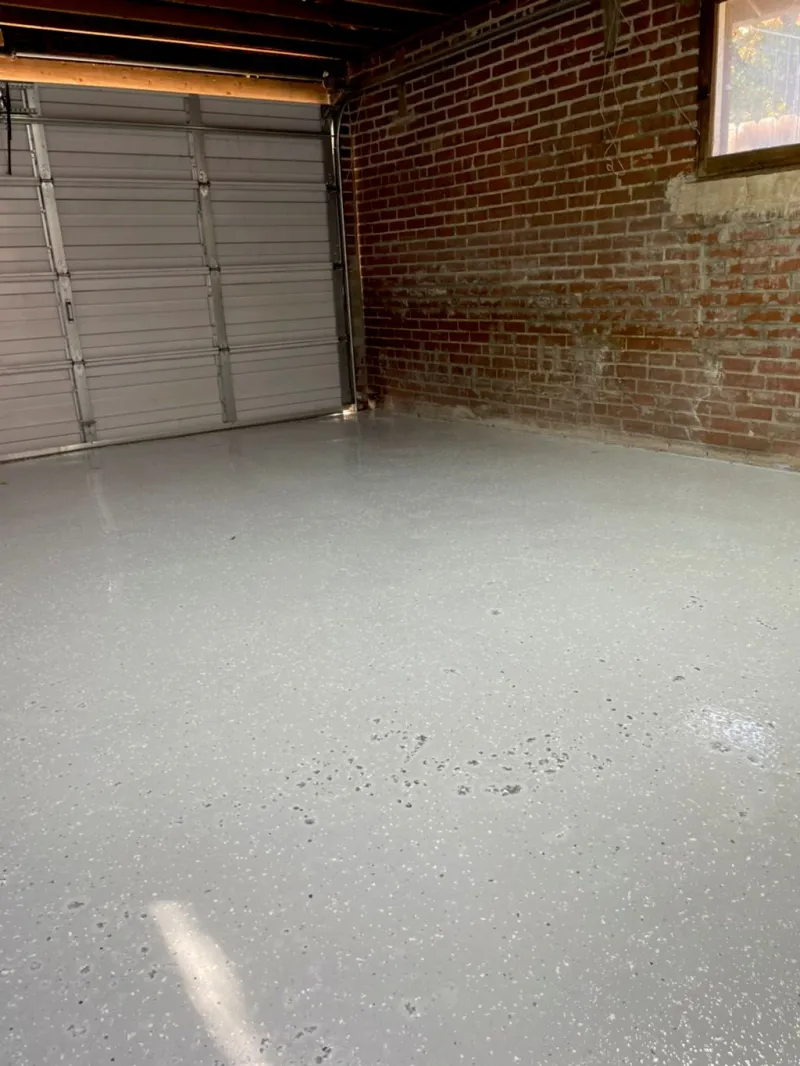
Garage Floors
A ground, patched and sealed garage floor that shrugs off ice melt, hot tires and oil — and wipes clean with a shop broom.
Learn More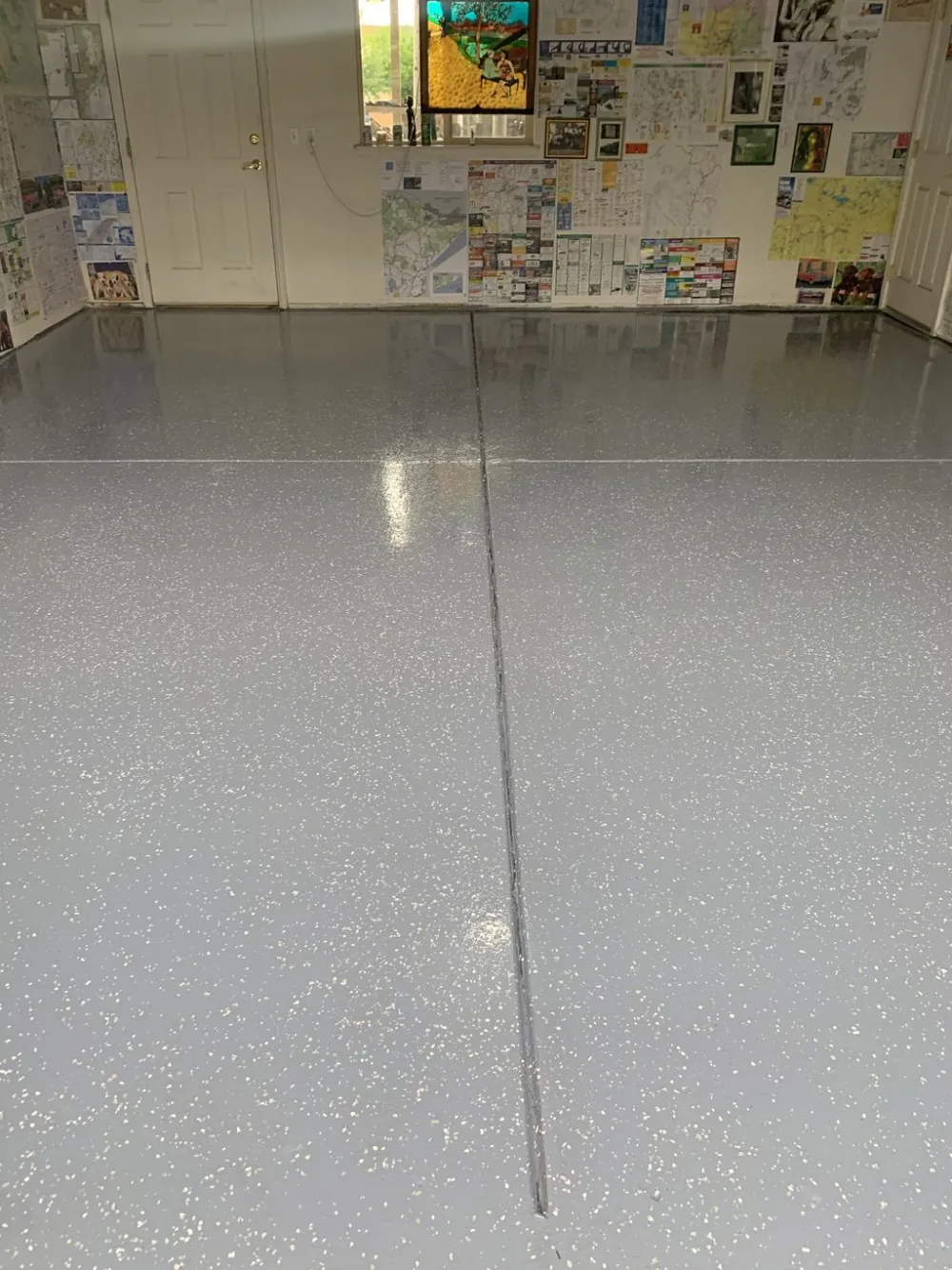
Concrete resurfacing rebuilds the worn top of a Denver slab without tearing the old concrete out and starting over. Freeze-thaw cycles, magnesium chloride and expansive clay soils leave Front Range slabs scaled, pitted, cracked and low in spots. We chase and fill the cracks, patch the spalls, then bond a polymer-modified cement overlay across the whole slab. What you get back is a smooth, sound surface that a coating, a stain or a sealer can grip.
This page covers the repair work and the overlay, the step that comes before any finish goes down on top. We resurface garage floors, basement slabs, shop floors, patios, pool decks, porches, steps, walks and concrete driveways. The finishes have their own pages, starting with a new garage floor coating once the garage slab is sound. Outdoor color and grip belong on our pool deck and patio finishes page, which covers the concrete outside.
Tell us about your project — we’ll get right back to you.
Front Range concrete takes a beating from freeze-thaw, and every slab expands and contracts through the whole season. Water gets into bare concrete, freezes overnight, and breaks the top layer apart into flakes and shallow pits. Magnesium chloride from the winter highways rides home on tires and pulls the surface apart from the inside. Scaled driveways and pitted garage floors show up the same way in Aurora, Lakewood and Castle Rock every spring.
Resurfacing takes care of the surface problems: scaling, spalling, pitting, worn low spots and a coating that has let go. A polymer-modified cement overlay bonds to sound concrete and rebuilds the top of the slab from edge to edge. It will not fix a slab that is heaving, sinking, or cracked through its full depth. Denver area soils include expansive clay that swells when wet and shrinks when dry, which lifts and drops slabs.
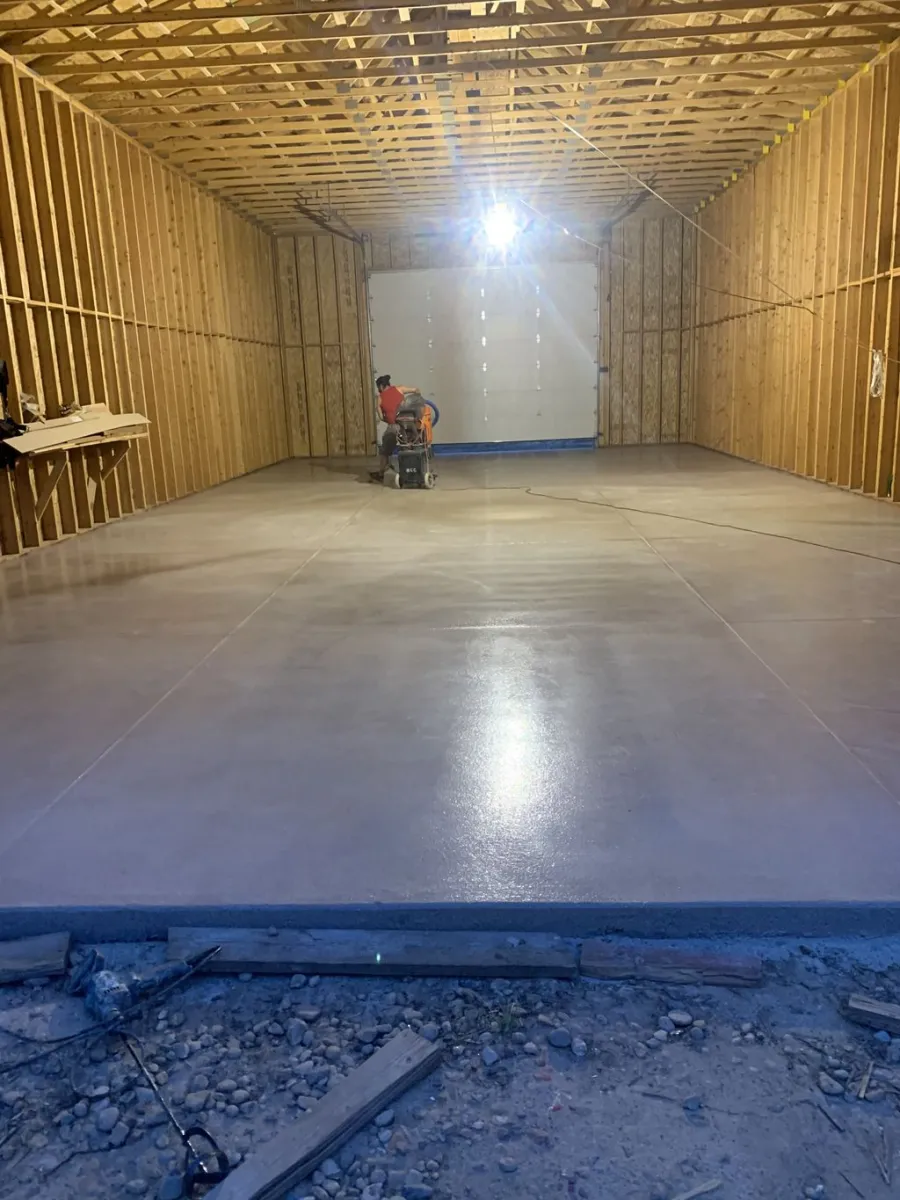
We have been coating floors since 2008, and every concrete resurfacing job starts the same way. You get a free on-site walk-through and a written quote that holds unless the scope changes. Prep comes next: diamond grinding inside, pressure washing and profiling outside, so the overlay gets a mechanical key. We chase and fill cracks, patch spalls and pitting, clean and fill the control joints, and treat oil soaked spots.
Interior slabs get a moisture check, and the concrete has to be dry before anything goes down. Inside, a self-leveling overlay or underlayment flows out flat and takes the low spots out of the floor. Outside, we trowel or broom texture the overlay on patios, pool decks, porches, steps, walks and driveways. Where you want a fresh surface rather than depth, a thin skim coat or microtopping does the job.
Resurfacing works when the slab is sound underneath and the damage sits in the top layer of concrete. It costs less than tearing the concrete out and pouring a new slab, and it takes less time. A pitted garage floor, a scaled driveway, a worn patio or a rough pool deck usually qualifies. When the slab is heaving, sinking or cracked through its full depth, we tell you it needs replacing.
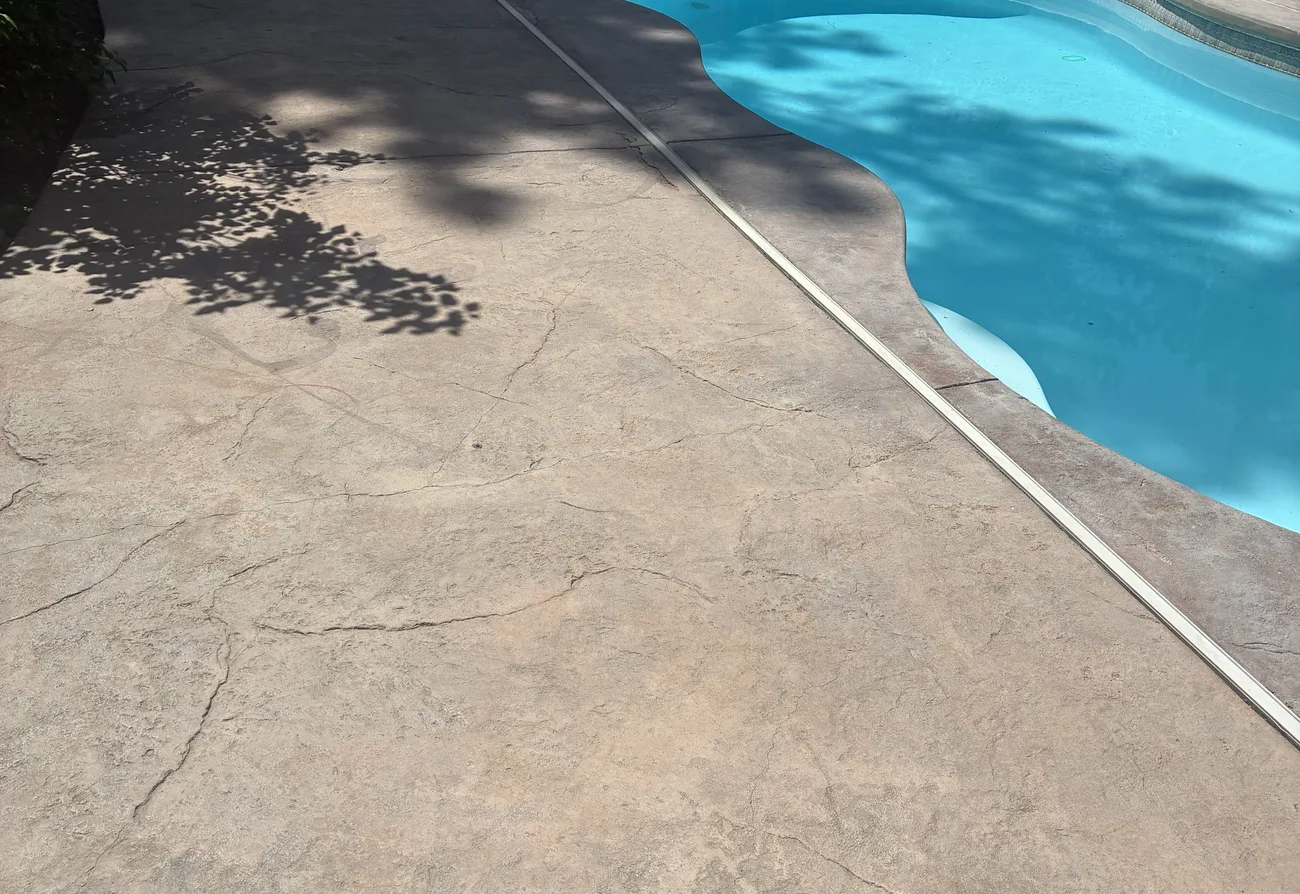
Once the overlay cures, the finish goes over the top, and you pick that with us at the walk-through. Garage and basement slabs take a coating built for hot tires, ice melt and damp concrete. Shop, warehouse and restaurant floors take urethane cement, which stands up to heat and heavy traffic. On a recent pool deck we fixed the cracks first, then stained it and added an acrylic top coat.
Free, no-obligation estimates across Denver and the surrounding metro.
(720) 691-6294From the first walk of the floor to the final one, here is exactly how it goes.
We come out, look at the actual slab and talk about how the space gets used. Cracks, spalling, oil, old coatings and moisture all get assessed here — because that is what decides the system and the price.
You get the price, the prep included, the system going down, and the walk-on and park-on dates in writing. It is free, and the number holds unless the scope changes.
Diamond grinding — never acid etching — then vacuum, chase and fill the cracks, patch the spalls and treat any contamination. This is most of the job and it is why the floor lasts.
Primer, base, flake or pigment, then the clear top coat. We tell you exactly when you can walk on it and when you can park on it, and the job is done when you have walked it with us.
Common questions about concrete resurfacing across Denver and the surrounding metro. Don't see yours? Give us a call — we're happy to help.
A ground, patched and sealed garage floor that shrugs off ice melt, hot tires and oil — and wipes clean with a shop broom.
Learn More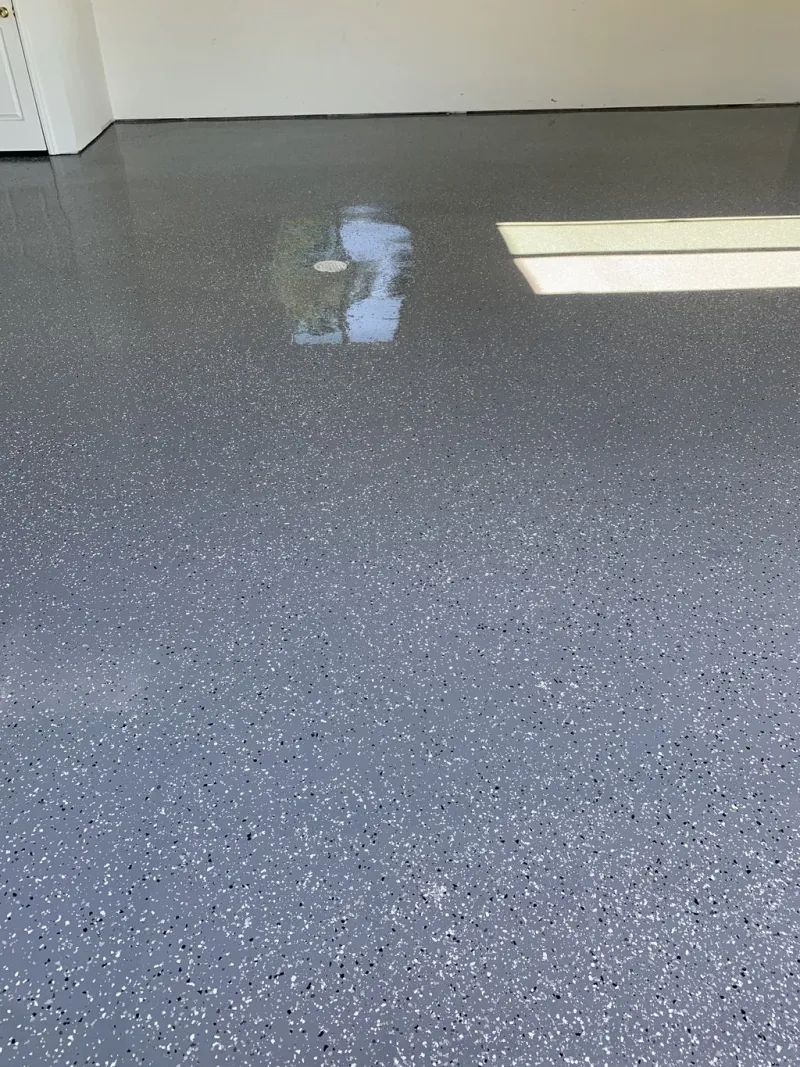
A UV-stable coating that cures in hours instead of days, goes down in cold weather, and does not amber in the sun like epoxy.
Learn More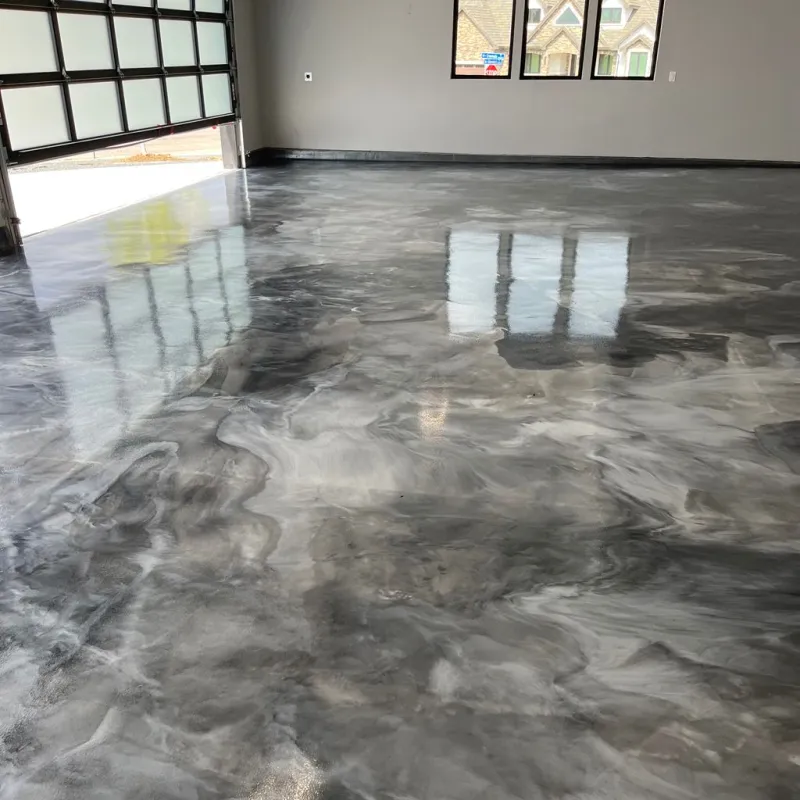
Hard-wearing epoxy systems for garages, basements, shops and commercial spaces — installed over properly ground and repaired concrete.
Learn More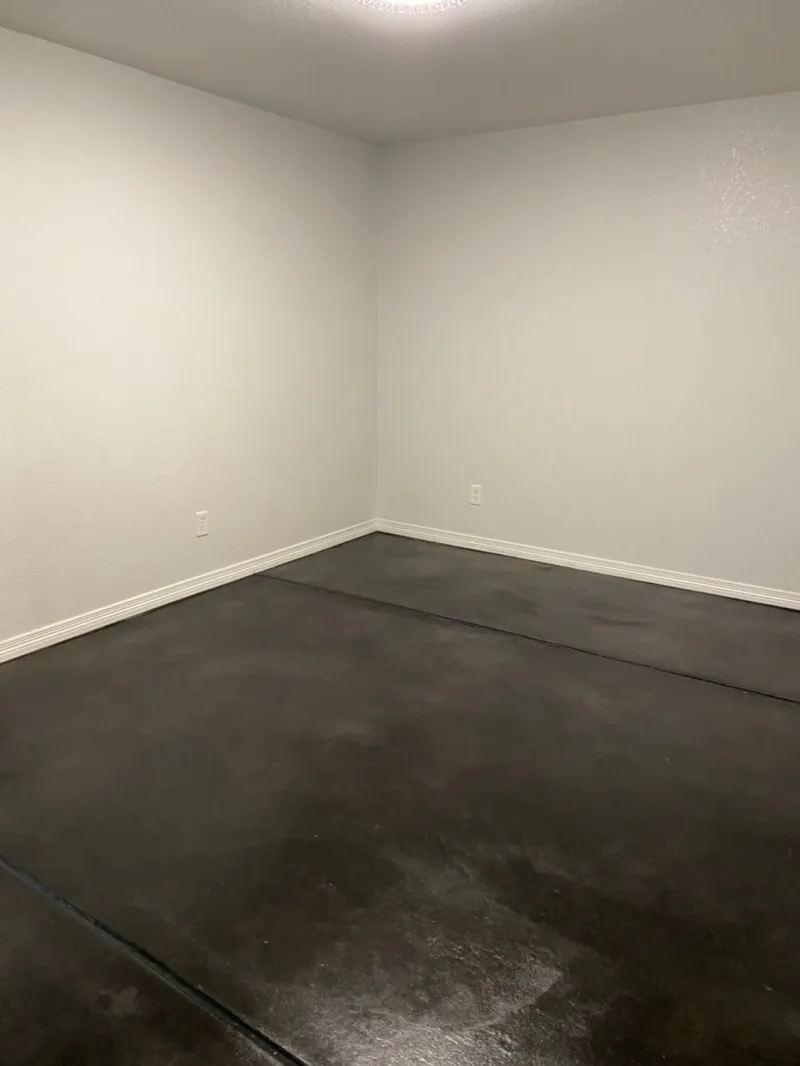
A sealed, warm-looking basement floor that stops concrete dust, cleans easily and does not turn into a problem when water shows up.
Learn More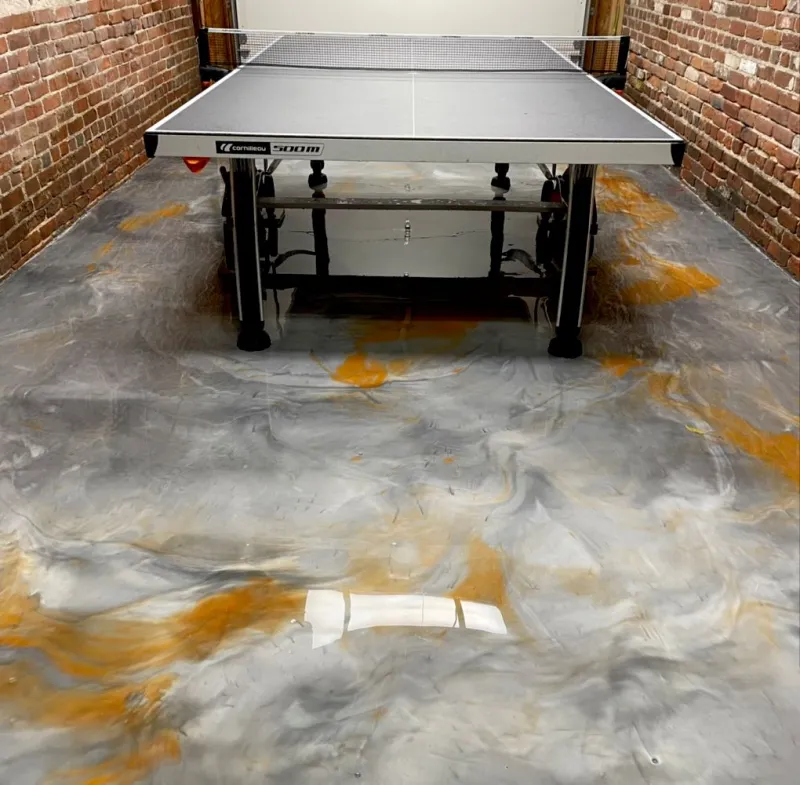
Marbled metallic finishes with real depth — poured, worked by hand and sealed. The floor people actually comment on.
Learn More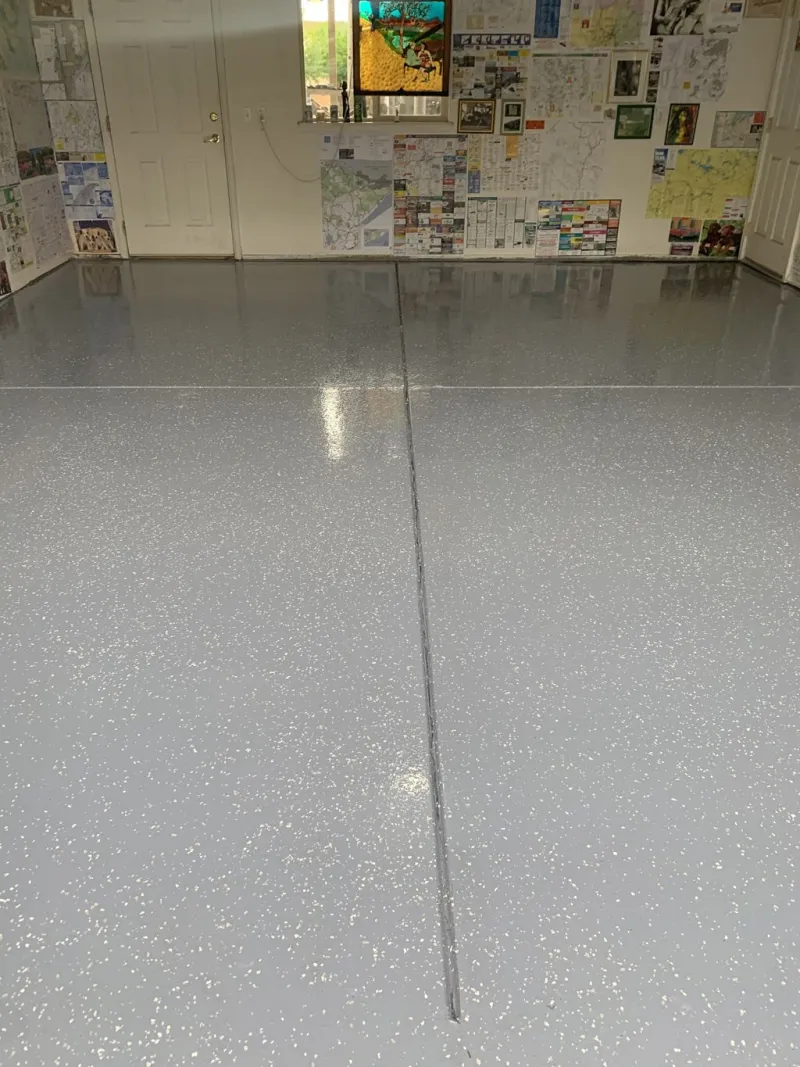
Vinyl flake broadcast into the base coat, then sealed — texture underfoot, hides dirt and wear, and it is the best value in coatings.
Learn More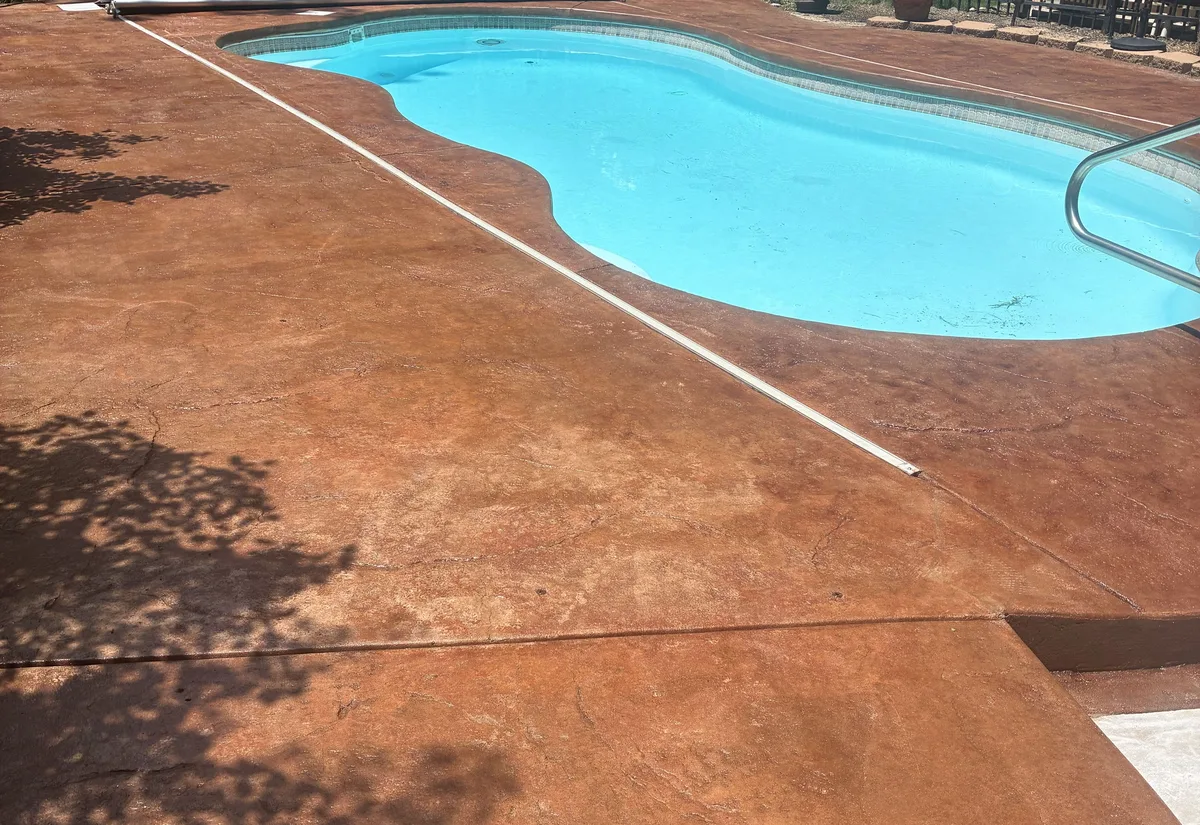
What concrete resurfacing costs in Denver per square foot, published ranges for driveways, patios, pool decks and floors, and when to resurface or replace.
Read more →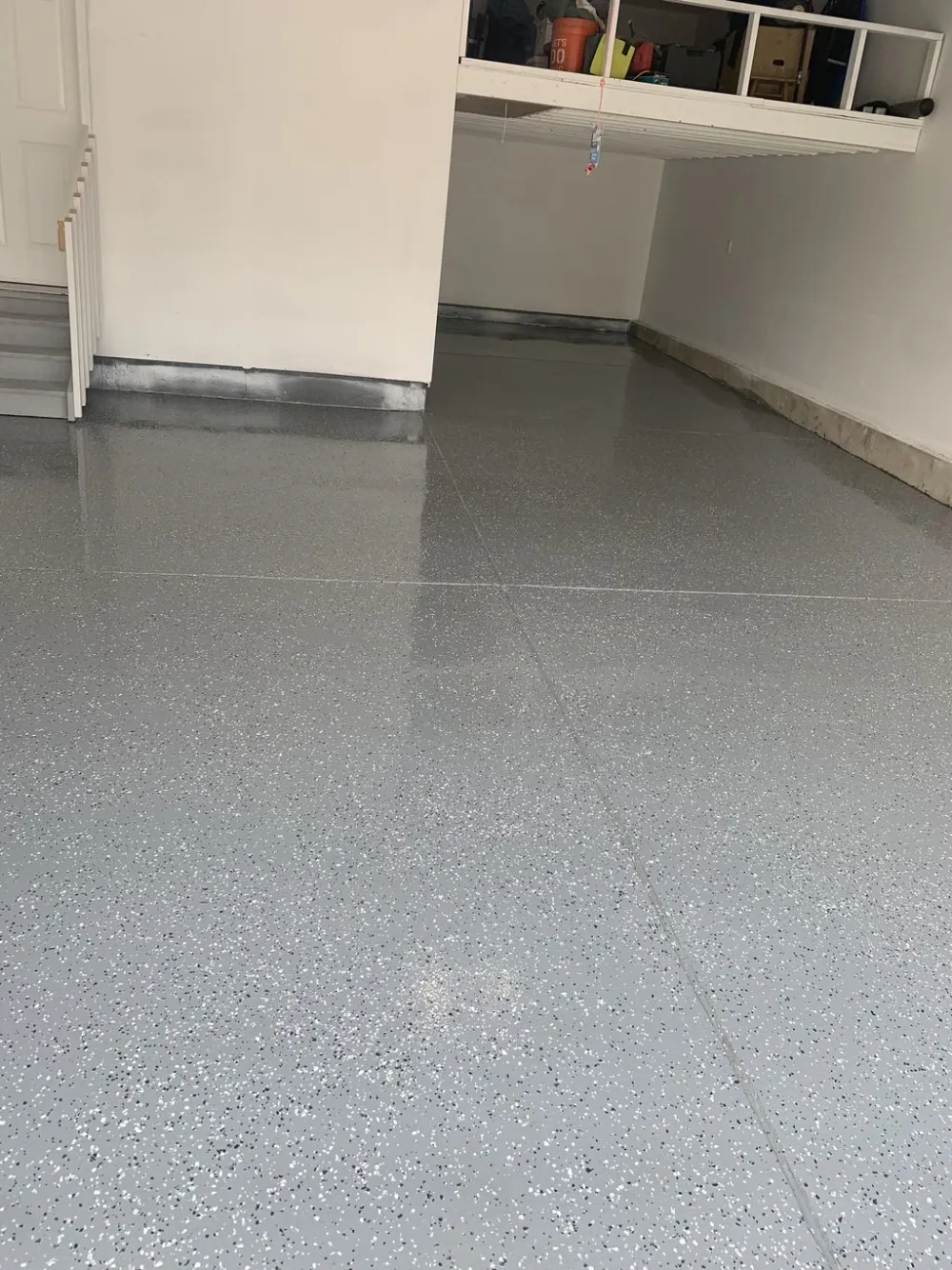
What epoxy flooring costs in Denver per square foot, published ranges by system and by space size, what moves the number, and how to read a quote.
Read more →Phil has been installing industrial flooring since 1992, and Denver Custom Coatings has 18 years behind it. The person who quotes your floor is the person who grinds and coats it.
Diamond grinding opens the concrete so the primer keys into the slab. Acid etching is faster and cheaper, and it is why most failed floors failed. Prep is where the job is won.
We walk the floor, price it in writing, and flag honest problems — moisture, contamination, a slab that needs real repair — before you commit. The number holds unless the scope changes.
Freeze-thaw, magnesium chloride off the highway and hot tires at altitude are hard on a slab. We specify systems that handle all three, including polyaspartic when the garage runs cold.
Bare garage slab, a basement you are finishing, a peeling floor that needs redoing, or a shop floor that has taken all it can? Call or send the form and we will walk the floor with you and hand you a free written quote.
Tell us about your project — we’ll get right back to you.